- Log in to post comments
You've just received your allowance, sworn this month will be different, and then one braai and a few Uber rides later, it's the 10th, and you're already eating plain pasta. Sound familiar? You're not alone.
Student life at NWU is vibrant, demanding, and, let's be honest, financially stressful for most of us. Whether you're on a private bursary or relying on money from home, or NSFAS, making your income stretch across an entire month is a real skill. The good news? It's one you can learn.
This guide breaks down everything from understanding your actual costs to practical hacks that NWU students use every day to stay afloat, and even save a little.
Understand What You Actually Owe (and Own)
Before you can budget, you need a brutally honest picture of your monthly money situation. Many students receive NSFAS funding, which covers registration, tuition, accommodation, and a monthly allowance, but the amounts vary, and understanding exactly what you get is step one.
If you live in an NWU residence, your accommodation is often billed directly, meaning you don't touch that money. What lands in your pocket is typically a food allowance and a personal care allowance. For many students, this works out to roughly R1,400–R1,600 per month in living allowances. That's your entire operating budget for groceries, airtime, toiletries, printing, transport, and socialising.

Notice that this budget is already tight at the top end, and it doesn't yet include unexpected expenses like a sick visit to the NWU Health Centre, a broken earphone, or textbooks not covered by your bursary. This is why every cent needs a plan.
Eat Well Without Eating Your Entire Budget
Food is where most student budgets collapse. The temptation to order Debonairs on Checkers Sixty60 at 9pm after a long study session is real, but it can wreck your month in one week.




"The Auxilium fund is a great stress reliever on a student's budget." — Johan Teessen, NWU Auxilium Fund Director
Stop Burning Money on Data You Don't Need to Buy
Data is the silent budget killer. R200 on data can disappear in a week if you're streaming, TikToking, and downloading notes on mobile. Here's how to dramatically cut this cost:
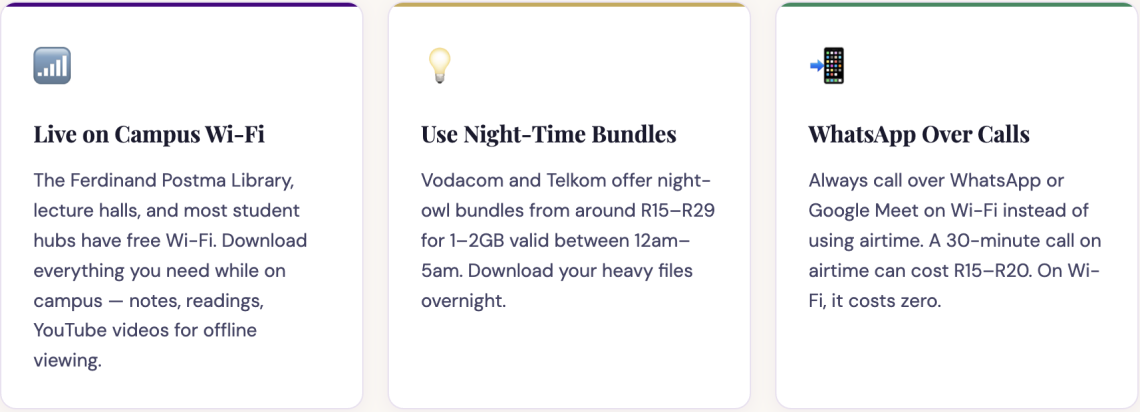
A Simple System That Actually Works
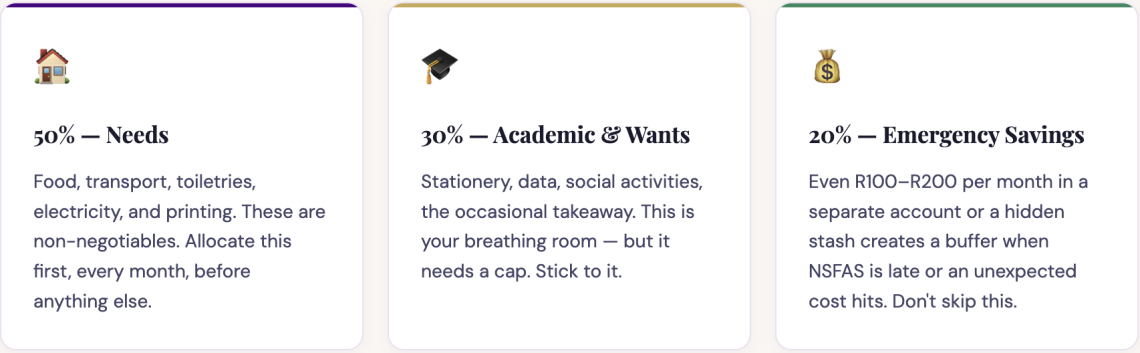
Forget complicated spreadsheets. Try the 50/30/20 rule adapted for student income:
Legitimate Ways to Make Extra Money as an NWU Student
The best supplement to a tight budget is a small income. Here are options that work around your studies:


Budgeting Isn't Deprivation — It's Freedom
There's a version of student life that feels like constant lack, always saying no, always anxious. But a well-managed budget actually does the opposite: it tells you exactly how much you can spend on fun without guilt, because the important things are already covered.
The most dangerous budget myth on campus is that budgeting is for people who are bad with money. In reality, the students who graduate without crippling debt, or who actually save for their first apartment, are almost always the ones who started tracking their money in res.
"Financial stress is one of the biggest threats to academic success. A student who is hungry or anxious about money cannot focus in a lecture hall."
NWU's own student wellness data confirms this. The demand for food parcels on campus has grown steadily, a sign that more students are struggling, not fewer. You're not failing if money is hard. You just need a better system.
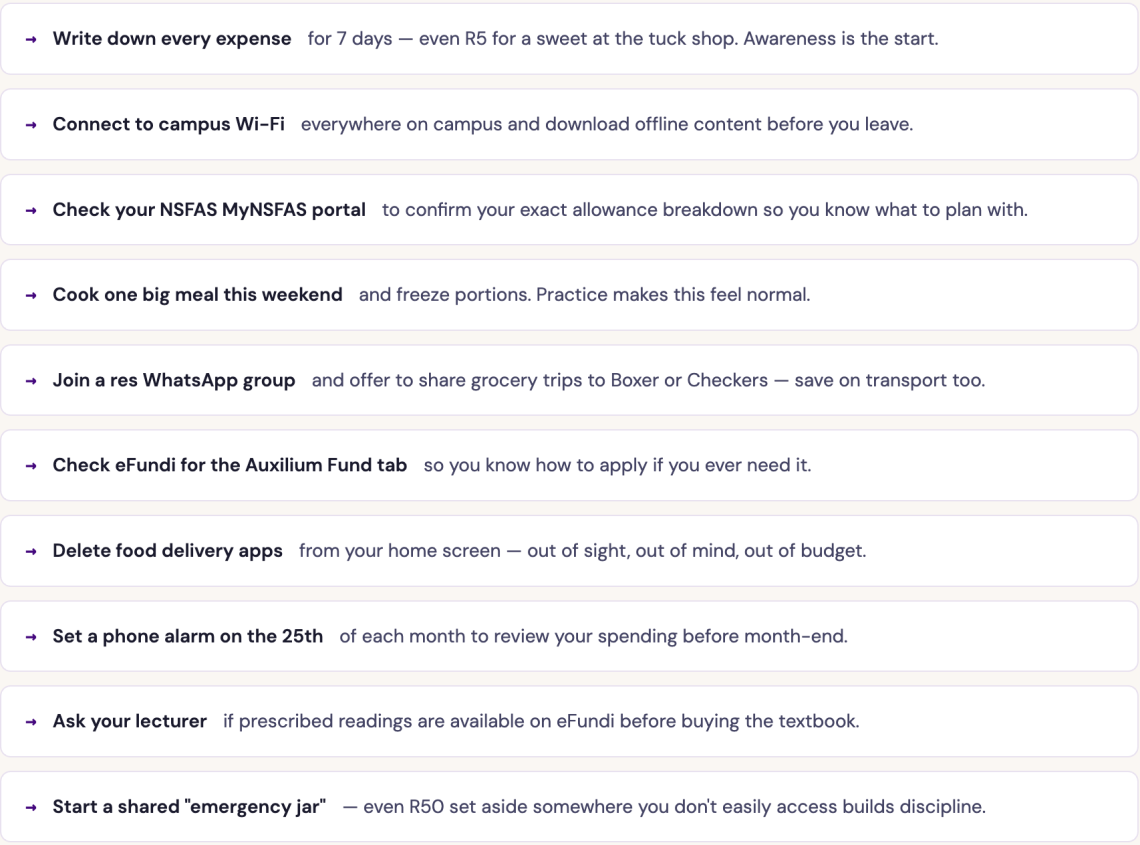
10 Things You Can Do This Week